[ newsletter ]
Stay ahead of Web3 threats—subscribe to our newsletter for the latest in blockchain security insights and updates.
Thank you! Your submission has been received!
Oops! Something went wrong. Please try again.
Explore transaction flow analysis on Veritas. Visualize fund movements, map address relationships, and uncover complex networks for forensic investigation.


Ever wonder where all that crypto money goes? It's not just lost in the digital ether. Every transaction leaves a trace, and understanding those trails is what transaction flow analysis is all about. Think of it like following footprints in the digital sand. We're going to explore how this process works, what tools can help, and why it matters for everything from law enforcement to your own investments. It turns out, the transparency of blockchain can actually tell us a lot about how funds move.
Think of the blockchain as a giant, public ledger. Every time someone sends or receives cryptocurrency, a record of that transaction is added, and it stays there forever. Transaction flow analysis is basically the process of looking at all those records and figuring out what's actually happening with the money. It's like being a financial detective, piecing together clues from digital breadcrumbs.
This whole idea hinges on the fact that blockchains are transparent. Unlike traditional banking where your transactions are private between you and your bank, on a blockchain, anyone can see the transactions. This doesn't mean they know who you are, because addresses are pseudonymous, but they can see the money moving. This transparency is what makes analyzing transaction flows possible in the first place. It's the bedrock upon which all these analysis tools are built.
Just seeing a bunch of transactions isn't all that useful on its own. The real magic happens when we take that raw data and turn it into something meaningful. Transaction flow analysis helps us connect the dots. We can see patterns, identify clusters of wallets that likely belong to the same person or group, and understand how funds are moving from one place to another. This transforms a sea of data into insights that can be used for various purposes, from security to compliance.
So, how do we actually do this? It's a multi-step process. First, we look at the raw transaction data. Then, we use techniques like wallet clustering to group addresses that probably belong to the same entity. We also use heuristic analysis, which is basically applying smart rules and patterns to figure things out. For example, we might look at how often wallets interact, the size of transactions, or identify 'change' addresses that often return funds to the sender. It's a bit like solving a puzzle with a lot of pieces.
Here's a simplified look at some key steps:
The core idea is to move beyond simply seeing that a transaction occurred, and instead, understand the context and relationships surrounding it. This allows for a much deeper comprehension of financial activity on the blockchain.

To really get a handle on how money moves around in the crypto world, we need to break down the process into a few key parts. It's not just about looking at individual transactions; it's about seeing the bigger picture and how different pieces fit together. Think of it like being a detective – you gather clues, connect the dots, and build a case. Here are the main tools and techniques we use:
This is where we try to figure out which different wallet addresses actually belong to the same person or organization. Since crypto addresses are pseudonymous, they don't directly tell you who owns them. But, if you see a bunch of addresses all sending funds to each other, or receiving funds from the same source, it's a pretty good bet they're connected. Tools can group these addresses together, creating a 'cluster' that represents a single entity. This helps us move beyond just tracking individual addresses to understanding the financial footprint of a whole group.
Grouping addresses helps us see the 'who' behind the transactions, not just the 'what' and 'when'. It's a big step in de-anonymizing the flow of funds.
Heuristics are basically smart shortcuts or rules of thumb that analysts use to make sense of complex data. In transaction flow analysis, these help us identify likely scenarios and patterns that might not be immediately obvious. For example, a common heuristic is that if multiple inputs are used in a single transaction, they probably belong to the same owner. Another is identifying 'change' addresses – these are the addresses that send back leftover funds after a transaction, usually indicating the sender is trying to maintain privacy.
When you make a transaction, you often get some change back. In the crypto world, this 'change' usually goes to a new address that's still controlled by you. Identifying these change addresses is super important. If you don't recognize them, you might think the funds went somewhere else entirely. By spotting these change addresses, we can more accurately trace the full path of funds back to their original owner, even if they've tried to split them up or obscure the trail. It's all about making sure we're not missing any part of the money's journey.
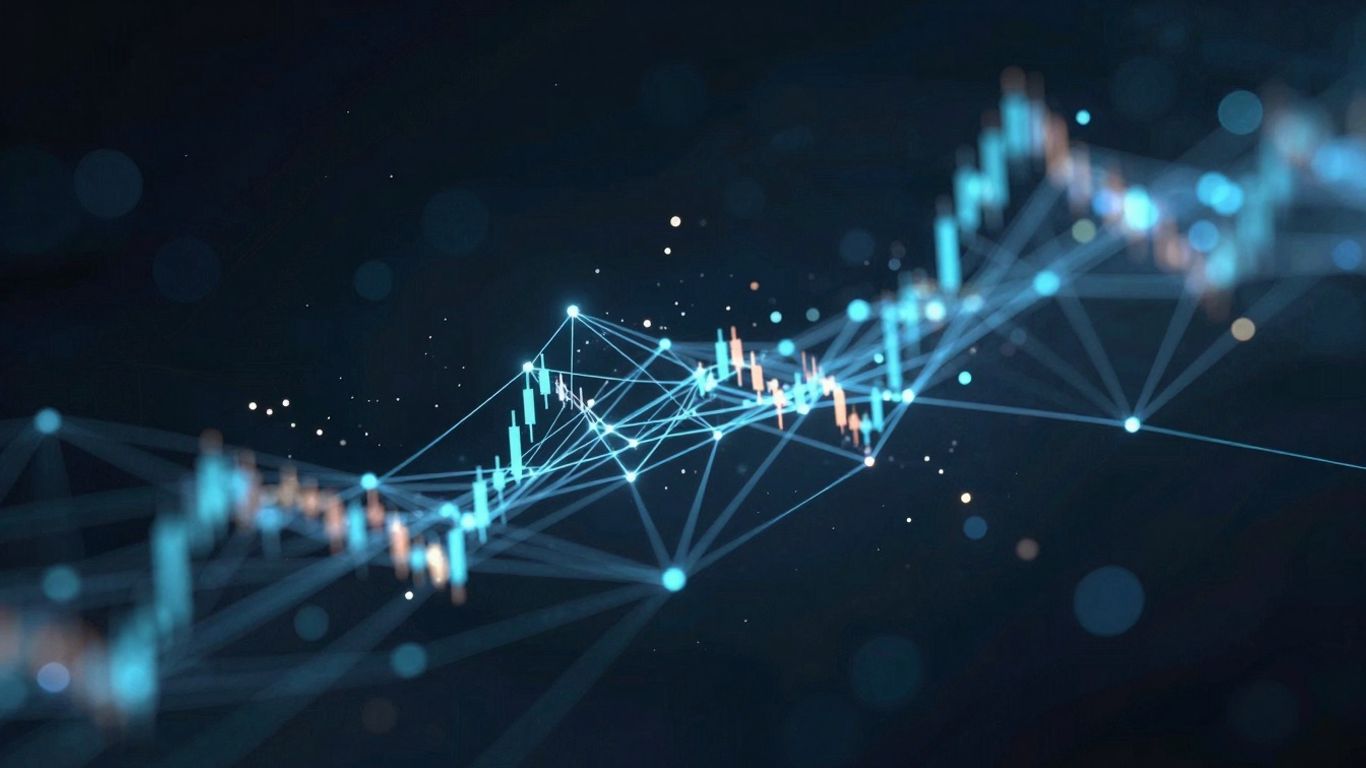
Alright, so you've got all this transaction data floating around on the blockchain. It's a lot, right? That's where Veritas Explorer really shines. It's built to help you make sense of it all, turning that raw data into something you can actually use. Think of it as your magnifying glass for the blockchain.
This is pretty straightforward but super important. Veritas Explorer lets you see exactly where money is moving. You can look at any address and get a clear picture of all the incoming and outgoing transactions. It's presented in a way that's easy to digest, both as a table for quick data review and as a visual map. This helps a ton when you're trying to figure out if funds are moving in a way that seems a bit off. It's like watching a money trail unfold right before your eyes.
Ever wonder how different crypto wallets are connected? It's not always obvious, especially in bigger cases. Veritas Explorer has tools that map out these connections. It shows you how addresses interact, helping you uncover networks that might be hidden. This is key for understanding the bigger picture, especially when you're dealing with complex schemes or trying to connect the dots between different players. It’s like building a social network, but for crypto addresses.
This is where you can really follow the money. The path tracing feature lets you track funds as they move from one place to another, even across multiple transactions and wallets. You can see the whole journey, from where it started to where it ended up. This is incredibly useful for following stolen assets or just understanding the flow of funds in complicated situations. It’s a vital part of any serious blockchain investigation, helping to build a solid case. You can even get a detailed report of your findings, which is important for securely storing and managing audit evidence. The ability to visualize and trace transactions provides transparency and accountability, allowing anyone to verify the flow of assets and build trust within the ecosystem. It’s about making the invisible visible. You can check out the token verification status for a specific asset to understand its legitimacy.
Here’s a quick look at what you can do:
Understanding these connections is key to uncovering larger patterns of activity, especially in cases of fraud or money laundering. It’s like connecting the dots in a massive digital web.
Sometimes, you just need to dig deeper. That's where advanced forensic tools come in. Think of it like being a digital detective, piecing together the story behind transactions and wallet interactions. It’s not just about spotting current risks; it’s about understanding the history and connections that might reveal something important.
Mapping out how different wallets are connected is key to uncovering larger patterns of activity, especially in cases of fraud or money laundering. It’s like connecting the dots in a massive digital web. Tools can help visualize these relationships, showing you how addresses interact in ways that might not be obvious at first glance. This helps in identifying hidden networks and understanding the scope of illicit operations.
This is where you can really follow the money. The path tracing feature allows you to track funds as they move across multiple transactions and wallets. You can see the entire journey, from the origin to the destination, even if it involves many hops. This is incredibly useful for following stolen assets or understanding the flow of funds in complex schemes. It’s a vital part of any serious blockchain investigation, helping to build a solid case. You can even get a detailed report of your findings, which is important for securely storing and managing audit evidence.
Blockchain analysis tools can identify specific patterns that often indicate suspicious behavior. This includes:
Understanding these patterns is crucial for identifying illicit financial activity. By looking for these specific behaviors, investigators can flag wallets and transactions that warrant closer inspection, moving beyond simple transaction viewing to active detection of criminal methodologies.
It's easy to get lost in the technical details of blockchain analysis, but this stuff actually has some pretty big real-world uses. It's not just for the super-geeks; it's helping keep things safer and more legit across the board.
Governments and law enforcement agencies are increasingly using transaction flow analysis to track down criminals. Think about it: every crypto transaction leaves a digital footprint. By following these trails, investigators can identify where illicit funds are coming from and where they're going. This is a game-changer for tackling things like money laundering, terrorist financing, and fraud. Companies that specialize in this kind of analysis have even helped recover millions in stolen funds and pinpoint those responsible for major hacks and scams. It's like having a digital magnifying glass for financial crimes.
Cryptocurrency exchanges are on the front lines, and they need to make sure they're not facilitating illegal activities. That's where transaction analysis comes in. Exchanges use these tools to build robust anti-money laundering (AML) and know-your-customer (KYC) programs. They can screen transactions against watchlists of sanctioned addresses, flag any suspicious activity, and generally keep their platforms cleaner. This helps them comply with regulations and builds trust with users and authorities alike.
For folks trading crypto, understanding transaction flows can offer some pretty neat insights. Watching large amounts of crypto move to exchanges might suggest that people are preparing to sell, potentially pushing prices down. Similarly, tracking the movements of 'whale' wallets (those holding a lot of crypto) can sometimes give clues about smart money strategies. Unusual patterns in transactions might even hint at upcoming market shifts. It's not a crystal ball, but it's another piece of the puzzle for making informed investment decisions.
Even with powerful tools, tracking crypto transactions isn't always straightforward. Several factors can make it tricky to follow the money trail completely. It's like trying to track a single drop of water in a vast ocean sometimes.
Some cryptocurrencies are built with privacy as a core feature. Coins like Monero, for instance, use advanced cryptographic techniques to hide transaction details. This means sender, receiver, and amount are all obscured by default. While this offers users enhanced privacy, it creates significant hurdles for transaction analysis. These privacy-enhancing features make it incredibly difficult, if not impossible, to trace funds directly on the blockchain.
Mixing services, often called 'tumblers,' are designed specifically to break the link between a user's input and output transactions. Users send their crypto to the mixer, which then pools it with funds from many other users. The mixer then sends out equivalent amounts to new addresses. This process deliberately scrambles the transaction history, making it very hard to determine which output belongs to which original input. It's a common tactic used to obscure the origin of funds, whether for legitimate privacy concerns or illicit activities.
The crypto world isn't just one blockchain anymore. We have many different networks, like Bitcoin, Ethereum, Solana, and more. Moving assets between these chains, often done through 'bridges,' adds another layer of complexity. Each chain has its own transaction history and rules. Tracking funds that hop from one blockchain to another requires specialized tools that can monitor and correlate activity across these disparate networks. This cross-chain movement is a frequent strategy in money laundering schemes to further complicate the trail.
So, you've got this powerful tool for digging into blockchain transactions, but how do you actually make it a regular part of what you do? It's not just about having the tech; it's about making it work for you without turning your whole operation upside down. Veritas gets this, and they've built things with integration in mind.
If you're dealing with a lot of data or need to automate checks, just clicking around in a web interface can get tedious. That's where the API comes in. Veritas offers a REST API that lets you pull all that security intelligence directly into your own systems. Think about automating business process automation for your compliance checks or risk assessments. You can set up alerts, run batch analyses, or feed transaction data into your existing dashboards. This means you're not just reacting to information; you're building it into your daily operations.
When you're onboarding new clients or partners, especially in regulated spaces, you need to know who you're dealing with. Transaction flow analysis adds a serious layer to this. Instead of just looking at submitted documents, you can analyze the on-chain history of a wallet. This helps you:
This kind of deep dive helps ensure that your partners are legitimate and that their funds are clean, which is super important for high-risk clients or when dealing with tokenized real-world assets.
Sometimes, things go wrong. A wallet gets compromised, or funds are stolen. This is where transaction analysis really shines during incident response. Specialized tools can help you:
The ability to visualize and trace transactions isn't just for security experts. It provides transparency and accountability, allowing anyone to verify the flow of assets and build trust within the ecosystem. It’s about making the invisible visible.
By integrating these capabilities, you move from just detecting problems to actively managing and resolving them, making your response much more effective.
So, we've looked at how transaction flow analysis works and why it's a big deal in the crypto world. Tools like Veritas Explorer let us see where money is actually going on the blockchain, which is pretty wild when you think about it. It's not just about tracking down bad actors, though that's a huge part of it. It's also about building trust and making sure everything is on the up and up. Being able to visualize these flows helps everyone from regular users to big institutions get a clearer picture. As crypto keeps growing, understanding these on-chain movements will only become more important for security, compliance, and just generally knowing what's going on.
Imagine the blockchain as a giant, public ledger where every money move is written down. Transaction flow analysis is like being a detective, looking at all those entries to see where money comes from, where it goes, and who is moving it. It helps us understand the story behind the digital money.
Veritas Explorer is a tool that makes blockchain detective work easier. It can show you a map of how money moves between different digital wallets, help you spot connections between wallets that might belong to the same person or group, and let you follow a specific amount of money through many different transactions.
Yes, it can! By looking at how money moves, law enforcement and security experts can find clues about illegal activities like money laundering or scams. They can see if money is being hidden or moved in suspicious ways, which helps them catch criminals.
Sometimes it's hard. Some special digital currencies are designed to hide where money goes. Also, services that mix money from many people together make it tough to follow. And when money moves between different blockchains, it's like crossing borders, which adds another layer of difficulty.
Even if you're not a detective, knowing how money moves helps you stay safe. It can help you see if a digital project you're interested in is linked to risky activities, or if a wallet you're about to send money to has a bad history. It's about making smarter, safer choices.
Veritas Explorer has tools that can help in tough situations, like recovering stolen assets. It can help trace where the stolen funds went and sometimes even help in getting them back by quickly tracking the money's path.