[ newsletter ]
Stay ahead of Web3 threats—subscribe to our newsletter for the latest in blockchain security insights and updates.
Thank you! Your submission has been received!
Oops! Something went wrong. Please try again.
Monitor price volatility risk with advanced indicators like Bollinger Bands, ATR, and VIX. Learn to implement and analyze volatility for better trading decisions.


Keeping an eye on market swings is pretty important, right? Whether you're trading stocks, crypto, or anything else that moves, understanding how much prices can jump around is key. That's where a price volatility risk monitor comes in. It's basically a tool that helps you see potential big price changes before they happen, so you can make smarter decisions and hopefully avoid nasty surprises. We'll look at some common ways to track this stuff and why it matters, especially with how fast things move these days.
Price volatility is basically how much and how fast the price of something, like a stock or a cryptocurrency, moves up and down. Think of it like the ocean – some days it's calm and predictable, other days it's rough with big waves. A stock that jumps 5% in a single day is way more volatile than one that only moves half a percent. This movement isn't inherently good or bad; it just shows how uncertain or how much interest there is in the market at any given time. Lots of things can cause these price swings, like big economic news, company earnings reports, or even just general investor feelings.
Knowing about price volatility is super important for anyone involved in trading or investing. It's not just about reacting when prices go wild. It's about understanding what's causing those big moves, how they might mess with your investment strategy, and how you can actually use that turbulence to your advantage while keeping your money safe. For active traders, volatility is a double-edged sword. Big price swings can mean big profits, but they can also lead to big losses if you're not careful. So, keeping an eye on volatility helps you make smarter moves instead of just guessing.
A good price volatility risk monitor usually has a few key parts working together. It's not just one single tool, but a system that pulls together different pieces of information.
Here are some common elements:
Building a solid volatility monitor means combining different types of analysis. You can't just look at one indicator and expect to get the full picture. It's about seeing how different signals interact and what that means for your overall risk exposure. The goal is to be prepared, not surprised, by market movements.
When we talk about keeping an eye on price swings, there are a few go-to tools that traders and analysts have relied on for ages. These aren't just fancy charts; they're designed to give us a clearer picture of how much prices are moving and what that might mean for the market. Understanding these core indicators is pretty much step one in getting a handle on price volatility risk.
Bollinger Bands are like a dynamic channel that hugs the price action. They're made up of a simple moving average (usually 20 periods) and two standard deviation bands plotted above and below it. The idea is that most price action will stay within these bands. When prices start to hug the upper band, it might suggest an asset is getting a bit stretched to the upside, and if they hug the lower band, maybe it's oversold. A key thing to watch is when the bands squeeze together – this often signals that a period of low volatility is ending and a bigger price move might be coming. It's a visual way to see if prices are trending strongly or just meandering.
If you want to know how much an asset is actually moving on an average day, the Average True Range (ATR) is your friend. It's not about direction, just the magnitude of price movement. ATR looks at the previous day's close, the current day's high-low range, and the previous day's close relative to the current day's range. It smooths this out to give you a single number representing average volatility. This is super useful for setting stop-loss orders. For example, you might set your stop-loss at 1.5 times the current ATR below your entry price for a long trade. This helps you account for normal price swings without getting shaken out too early. A rising ATR usually means more choppy price action is happening.
The VIX, or the CBOE Volatility Index, is often called the "fear index." It's a bit different because it's not tied to a single asset but rather to the S&P 500 index options. It essentially measures the market's expectation of volatility over the next 30 days. When the VIX is high, it means traders are expecting big price swings, usually associated with uncertainty or fear. When it's low, the market is generally calmer. It's a great gauge of overall market sentiment and can sometimes act as a contrary indicator – extreme fear (high VIX) can sometimes precede market bottoms. It's a good way to get a feel for the general mood out there.
These indicators aren't magic bullets, but they provide a structured way to quantify price movement. Using them together can give you a more robust view than relying on just one. Think of them as different lenses to view the same phenomenon – price volatility. Understanding how they interact with each other and with price action itself is where the real insight comes from.
Here's a quick rundown of how you might use them:
Getting comfortable with these tools is a solid foundation for any price volatility risk monitor. They help translate raw price data into actionable insights about market conditions. You can find more on volatility indicators here.
Beyond the basics, there are more sophisticated ways to keep an eye on price swings. These methods often combine different indicators or look at volatility from a unique angle. They can help you spot opportunities or risks that simpler tools might miss.
Keltner Channels are like Bollinger Bands but use a different calculation for their width. Instead of standard deviation, they use the Average True Range (ATR). This makes them a bit more sensitive to the actual price movement, including gaps. The channels are typically set at two times the ATR above and below a central moving average.
Keltner Channels offer a dynamic way to visualize price boundaries, adapting to the market's current level of fluctuation. They are particularly useful for identifying potential trend continuations when prices consistently hug one of the channels.
Donchian Channels are great for spotting when prices are breaking out of a range. They simply plot the highest high and lowest low over a specific number of past periods (like 20 days). The space between these two lines forms the channel.
This indicator is pretty straightforward and is often used to confirm breakouts, giving traders a clear visual cue when a significant price move might be underway.
The Chaikin Volatility indicator measures the percentage change in the Average True Range (ATR) over a specific period. It essentially looks at how much the ATR itself is changing, giving you a sense of accelerating or decelerating volatility.
This indicator helps you understand the rate of change in volatility, which can be a leading signal for future price action. It's a bit more nuanced than just looking at the ATR itself.
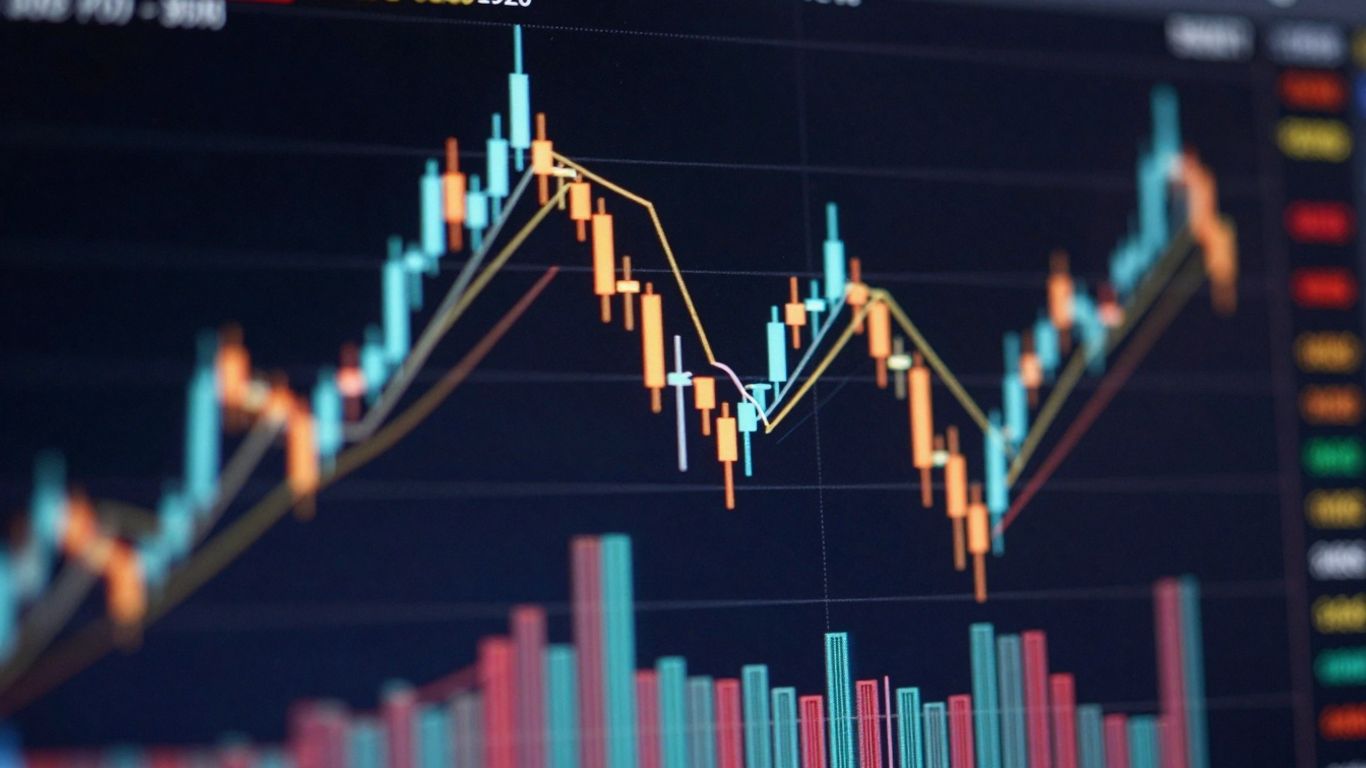
Building a solid price volatility risk monitor isn't just about picking the right indicators; it's about how you put them to work. You need a system that can actually make sense of the data and give you actionable insights. This means getting your data in order, combining different risk signals, and setting up clear rules for when to pay attention.
First off, you've got to clean up your data. Different indicators might give you numbers on wildly different scales. For example, one might track price changes in dollars, while another tracks percentage changes. To compare them fairly, you need to normalize them. This usually means scaling them to a common range, like 0 to 1. Sometimes, simple scaling isn't enough, especially if you have extreme spikes that could skew your results. In those cases, techniques like winsorization can help, where you cap the extreme values without completely throwing them away. This way, you're not letting one massive spike totally distort your overall risk picture. It's all about making sure each piece of data speaks the same language.
Getting your data ready is a big part of the process. If you just throw raw numbers into a system, you're likely to get confusing or even wrong signals. Think of it like trying to mix paint colors without cleaning your brushes – you'll end up with a muddy mess.
Once your data is normalized, you need to combine these individual risk signals into a single, understandable score. You can't just look at one indicator; you need to see the whole picture. A common way to do this is by using a formula that takes your normalized metrics and calculates an overall risk likelihood. This formula should be designed so that a high value in any single metric can significantly increase the overall risk score. It's not about averaging things out to the point where a high risk in one area is hidden by low risk in another. The goal is to create a unified score that reflects the probability of at least one significant risk factor being present. This aggregated score gives you a clearer, more holistic view of the potential dangers. For a deeper dive into how these metrics can be combined, you might look into adaptive indicators.
Finally, you need to decide what these aggregated risk scores actually mean. What's a "high" risk score, and what's "low"? This is where setting thresholds comes in. These thresholds act like your alarm system. When the aggregated risk score crosses a certain line, it's time to take notice. The exact level for these thresholds will depend on your specific needs and how much risk you're willing to tolerate. Do you want to be alerted to even the slightest hint of trouble (lower threshold, more alerts, potentially more false positives), or are you only concerned about major red flags (higher threshold, fewer alerts, potentially missing some risks)?
Here's a basic idea of how thresholds might work:
Choosing these levels requires careful consideration and often some trial and error to find what works best for your trading strategy and risk appetite.
The world of Decentralized Finance (DeFi) is constantly changing, and so are the ways attackers try to exploit it. We're seeing a definite shift. It used to be more about credit risks, but now the focus is heavily on operational slip-ups and security holes directly within the blockchain systems. Think about it: as these platforms get bigger and more complex, they naturally create more chances for things to go wrong. Plus, with so much money locked up, they become really attractive targets for sophisticated hackers.
Here's a quick look at how attack vectors have changed:
The rapid growth in DeFi and the tokenization of real-world assets (RWAs) has created a much larger and more complex attack surface. This means that traditional security measures are often no longer enough to protect against the evolving threats.
The market for Real-World Assets (RWAs) on the blockchain is really taking off. We're talking about traditional things like government bonds and real estate being represented as digital tokens. Projections show this market could be worth trillions in the next few years. But with this huge growth comes a whole new set of security worries. As more traditional assets move onto the blockchain, the potential impact of a security failure grows exponentially. It's not just about smart contract code anymore; it's about the entire system, including how off-chain assets are linked and managed.
Here's a snapshot of the RWA market:
This expansion means that security needs to be top-notch, covering everything from the code itself to how the whole system operates. A failure in one part could have ripple effects across many different types of assets.
Stablecoins, which are designed to maintain a steady value, have become super important in the crypto world, especially in DeFi. They're used for everything from trading to payments. However, they've also become a major tool for illicit activities. A significant chunk of illegal transactions now happens using stablecoins. This poses a big problem for tracking down criminal activity and for the overall integrity of the crypto ecosystem.
It's a tricky balance: stablecoins are useful for legitimate purposes, but their features also make them attractive for bad actors. Monitoring their flow and usage is becoming more important than ever.
Dealing with market swings means we need smarter tools. Think of artificial intelligence not just for predicting prices, but for building a solid defense against the chaos. AI can look at massive amounts of data, way more than any person could, to spot patterns that signal trouble before it really hits. It's like having a super-powered lookout constantly scanning the horizon.
These AI systems can act as a continuous security guard for your trading operations. They don't just check things once; they're always on, analyzing everything from transaction flows to smart contract interactions. This constant watch helps catch unusual activity that might otherwise go unnoticed, especially in fast-moving markets. The goal is to move from reacting to problems to proactively preventing them.
Traditional security checks are often like taking a snapshot of your system at a single point in time. But in today's markets, things change in milliseconds. That's where a continuous monitoring architecture comes in. It's about building a system that's always observing, always analyzing, and always ready.
This involves setting up a network of specialized tools and agents that work together. They can track market data, analyze transaction logs, and even check the code of smart contracts in real-time. If something looks off, like a sudden spike in activity or an unexpected contract interaction, the system flags it immediately. This constant stream of information allows for a much more dynamic and responsive approach to risk management.
Having all this data and monitoring is great, but what happens when it flags something? That's where automated alert systems become your best friend. Instead of relying on someone to manually sift through alerts, these systems can be programmed to react instantly.
When a pre-defined threshold is crossed or an unusual pattern is detected, an alert can be sent out automatically. This could be a simple notification to a trader, or it could trigger a more complex automated response, like adjusting trade sizes or even pausing certain operations. This speed is critical in volatile markets where every second counts. It helps ensure that potential issues are addressed before they escalate into significant problems, keeping your risk exposure in check.
So, we've looked at how price bands and spikes can give us clues about what's happening in the market. It's not always easy to tell if a big price move is just a blip or something more serious. Using tools like Bollinger Bands and keeping an eye on things like the VIX can help. Remember, no single indicator is perfect, but putting a few together and understanding the context can really make a difference. It's all about staying aware and adjusting your approach as the market does its thing. Keep watching those charts, and stay smart out there.
Think of a Price Volatility Risk Monitor as a special tool that watches how much prices jump around in the market. It helps people see if prices are getting too wild, which could mean there's a higher chance of losing money. It's like a weather forecast for your money, warning you about potential storms.
Watching price changes is super important because big, sudden moves can be risky. If prices swing wildly, it's harder to make smart decisions about buying or selling. Monitoring this helps you understand the risks involved and protect your investments from unexpected drops.
Bollinger Bands are like invisible lines drawn around the usual price path of something. They show the normal ups and downs. When the price gets close to these lines, it might mean something is about to change, like a big price jump or a drop. They help you see if prices are going too high or too low compared to normal.
The VIX, or Volatility Index, is like a score for how worried investors are about the market. When people get scared about prices dropping, the VIX usually goes up. It’s called the 'fear index' because it shows when fear is taking over, which often happens before big market drops.
Technology is a huge help! We can use smart computer programs, like Artificial Intelligence (AI), to watch prices all the time. These programs can spot risky patterns much faster than humans can and can even send alerts automatically when something looks dangerous. This helps us react quickly to protect our money.
Real-World Assets (RWAs) are things like buildings or gold that are represented as digital tokens on a blockchain. While they can be useful, they also bring new risks. Because they mix traditional finance with new technology, they can be targets for complex attacks. Also, as more of these assets are used, especially with stablecoins, there’s a growing risk of money being used for bad things.