[ newsletter ]
Stay ahead of Web3 threats—subscribe to our newsletter for the latest in blockchain security insights and updates.
Thank you! Your submission has been received!
Oops! Something went wrong. Please try again.
Explore graph neural networks for crypto risk assessment. Learn use cases in financial crime detection, DeFi security, and anomaly detection.


The world of cryptocurrency is pretty wild, right? It's like the Wild West sometimes, with all sorts of new tech popping up. But where there's innovation, there's also risk. Think money laundering, scams, and all sorts of shady dealings. Traditional ways of spotting this stuff just don't cut it anymore. That's where graph neural networks crypto risk comes in. These smart systems can actually look at how transactions are connected, like a giant web, and help us spot the bad actors. We're going to break down how these networks are changing the game for keeping things safe.
Look, crypto isn't just a bunch of isolated digital coins floating around. Every transaction, every wallet interaction, it's all connected. Think of it like a giant, ever-expanding web. Traditional risk assessment tools often miss this because they look at each transaction as a separate event. They don't really see how one transfer might be part of a much larger, potentially shady, operation. This is where things get tricky. Criminals know this, and they exploit these connections to hide their tracks. They move funds through multiple wallets, across different blockchains, using mixers, and all sorts of other methods to make it look like a legitimate flow of money. It's like trying to follow a single thread in a massive ball of yarn – incredibly difficult if you don't have the right tools.
This is where Graph Neural Networks, or GNNs, really shine. Unlike older methods, GNNs are built to understand relationships. They look at the whole graph – the nodes (which are like wallets or transactions) and the edges (which represent the flow of funds between them). By analyzing these connections, GNNs can spot patterns that are invisible to other systems. They can identify clusters of suspicious activity, detect money laundering typologies, and even flag wallets that might be involved in illicit activities, even if their individual transactions look normal on the surface. GNNs allow us to see the forest for the trees, understanding the context of each transaction within the broader network.
Here's a simplified look at how GNNs process this information:
So, why is this so important for crypto risk? Well, the lines between traditional finance and the decentralized world are blurring. We're seeing more institutional involvement, more regulated entities interacting with crypto. This means the risk assessment methods need to catch up. GNNs offer a way to apply sophisticated, relationship-aware analysis to the unique structure of blockchain data. They can help bridge the gap, providing a more accurate picture of risk that regulators and traditional financial institutions can understand and trust. It's about bringing a more nuanced, data-driven approach to a space that's often seen as opaque and hard to police.
The pseudonymous and decentralized nature of cryptocurrency, while offering benefits like financial inclusion, also presents significant challenges for traditional risk management. Criminals exploit these characteristics to obscure illicit funds, making it difficult for conventional systems to detect and prevent financial crime. GNNs provide a powerful new lens through which to view these complex networks, enabling a more proactive and effective approach to risk assessment in the digital asset space.
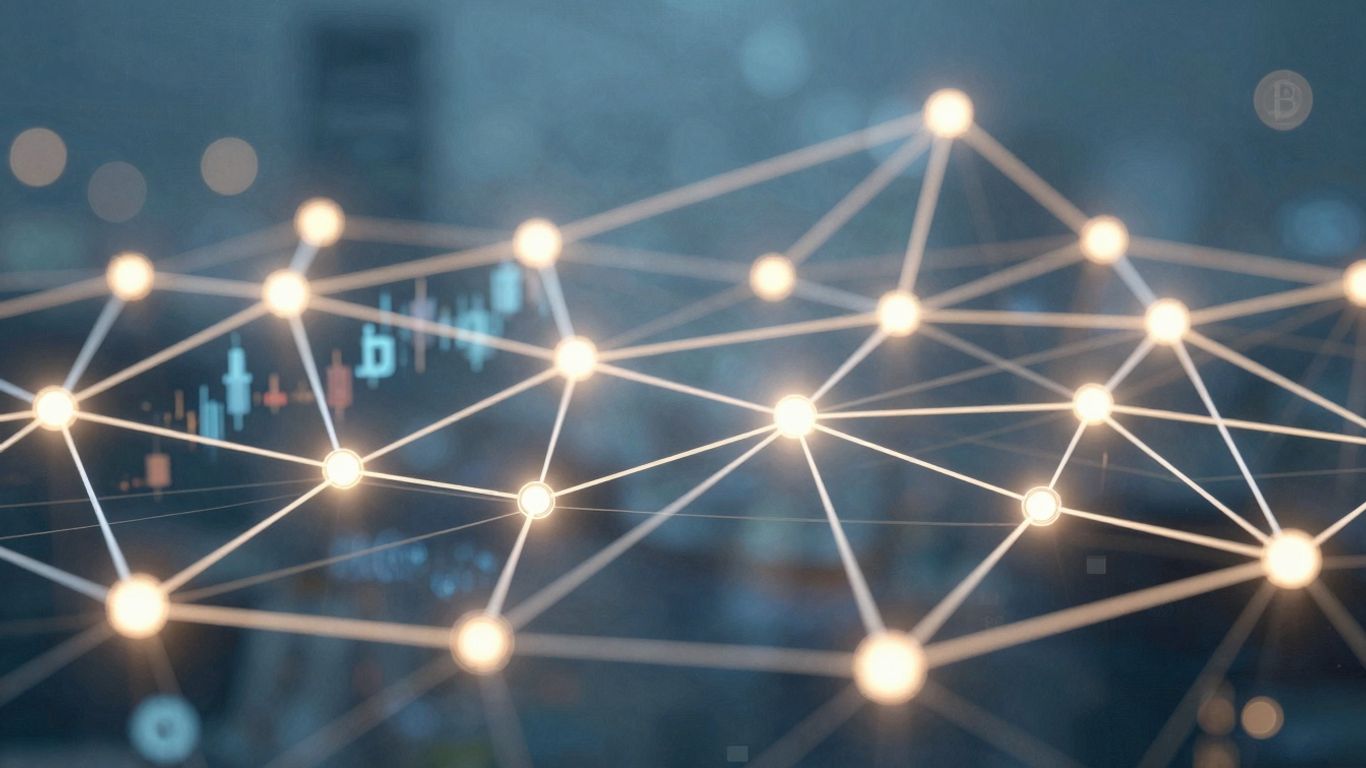
When we talk about crypto, it's easy to get caught up in the shiny new tech and the potential for innovation. But let's be real, where there's money, there are also people trying to do bad things with it. The decentralized and pseudonymous nature of cryptocurrencies, while offering benefits, also creates a playground for financial criminals. Think money laundering, ransomware payments, and activity on the darknet. Traditional methods for spotting this stuff just don't cut it anymore because they can't really see how transactions are connected. That's where Graph Neural Networks (GNNs) come in. They're pretty good at looking at the whole network of transactions, not just individual ones, to find suspicious patterns.
Money laundering in crypto often involves complex chains of transactions designed to hide the original source of funds. Criminals might use techniques like structuring (breaking down large amounts into smaller ones to avoid reporting thresholds) or mixing services to obscure the trail. GNNs can help by analyzing the structure of these transaction networks. They can identify clusters of wallets that frequently interact, unusual transaction velocities, or patterns that resemble known money laundering schemes, like layering or circular trading.
The sheer volume and interconnectedness of crypto transactions make manual analysis or simple rule-based systems insufficient. GNNs offer a way to process this complexity, finding subtle relationships that might otherwise go unnoticed.
Ransomware attacks are a growing problem, and criminals often demand payment in cryptocurrency because it's fast and can be harder to trace than traditional money. GNNs can be used to track the flow of these illicit funds from the moment the ransom is paid. By mapping out the transaction paths, investigators can potentially identify the wallets controlled by the attackers, even if they try to move the money through multiple intermediaries or privacy-focused coins. This helps in disrupting the criminal's ability to profit from their attacks and can aid in recovering stolen assets.
Darknet markets, where illegal goods and services are traded, heavily rely on cryptocurrency. GNNs can analyze transaction patterns associated with these markets, identifying key nodes and transaction flows. Similarly, privacy coins like Monero or Zcash are designed to obscure transaction details. While challenging, GNNs can still be applied by looking at metadata, transaction volumes, and the network structure around these privacy coins to identify suspicious activity or potential links to illicit sources. The goal is to make the pseudonymous nature of crypto less of a shield for criminal activity.
Decentralized finance, or DeFi, has really opened up a lot of new ways to handle money, but it's also become a playground for bad actors. These platforms let people do things like lend, stake, and swap assets without needing to show ID, which is great for privacy but also makes it super easy for criminals to mix and move dirty money around. They can create these really complicated webs of transactions that are tough to untangle.
DeFi platforms are constantly under attack. We're seeing a lot of exploits happening, and the losses are adding up. For example, in the first half of 2025, over $2.5 billion was lost due to major breaches. These aren't just simple hacks; they often involve complex tactics like flash loans, which let attackers borrow huge amounts of crypto for a single transaction, or manipulating oracle data to trick the system. It's a real challenge because these platforms are built on code, and finding every single flaw before it's exploited is incredibly difficult. Many protocols rush through security checks, and even after deployment, they might not have continuous monitoring, leaving them vulnerable.
The speed at which these attacks happen is mind-boggling. We're talking about sub-second response times needed to stop some exploits, which is just not possible with manual security checks. This really highlights the need for automated, real-time defenses.
Non-fungible tokens (NFTs) have introduced a new twist to money laundering. Criminals can buy NFTs with illicit funds, sometimes at prices way above their actual worth, and then sell them or transfer them to other wallets. This process can help legitimize dirty money by creating a paper trail that looks like a legitimate sale. Because the valuation of NFTs can be pretty subjective and there isn't a lot of oversight, it's a fertile ground for this kind of activity. It's like using art to launder money, but in the digital world.
Crypto is global, and regulations aren't always keeping up. This creates gaps that criminals can exploit. They can move funds across different countries with varying levels of anti-money laundering (AML) rules. This makes it much harder for any single authority to track and stop them. They can layer funds through multiple jurisdictions, making it look like the money has been cleaned when it's just been moved around to confuse investigators. The lack of a unified global approach to crypto regulation is a significant hurdle in combating these cross-border financial crimes.
When we talk about spotting risky behavior in crypto, it's not just about looking at individual transactions. We need to get smarter, using advanced methods to figure out who's playing by the rules and who's not. This is where graph neural networks (GNNs) really shine, helping us build better risk scores and find those sneaky anomalies.
Think of all the crypto transactions happening. Instead of just looking at them one by one, we can connect them. We build a graph where each wallet or transaction is a node, and the transfers between them are the edges. This way, we capture the relationships. We can then feed all sorts of data into this graph – things like how much was sent, how often, when it happened, and even the history of the wallets involved. GNNs are great at processing this kind of connected data. They learn patterns by looking at a node's neighbors and their connections, not just the node itself. This helps us see the bigger picture of how money is moving, which is way more powerful than just looking at isolated data points.
Once we have our graph set up, we can train a GNN to give each wallet a risk score. The idea is to train the GNN to recognize what 'normal' looks like. It learns a score for each wallet based on its connections and activity. If a wallet's behavior is way different from the typical patterns the GNN has learned, it gets flagged as anomalous. This is often done without needing to pre-label specific 'bad' wallets, which is tough to do accurately. The GNN just figures out what's unusual based on the data. This gives us a continuous score, meaning we can rank wallets from low risk to high risk, making it easier to prioritize investigations.
Here's a simplified look at how a GNN might assign anomaly scores:
When we calculate risk metrics, we often run into issues with extreme values, or outliers. These can mess up our calculations and make our risk scores less reliable. That's where techniques like Winsorization and Min-Max Scaling come in handy.
We often use Winsorization first to handle extreme values, and then apply Min-Max Scaling to get everything into a nice, tidy range for our final risk scoring. This two-step process helps make sure our risk metrics are robust and not overly influenced by a few unusual data points.
Building effective risk scoring models in crypto requires more than just raw data. It involves clever data preparation and advanced machine learning techniques. By combining graph structures with GNNs and using smart scaling methods, we can create more accurate and reliable ways to identify potential risks before they become major problems.
Graph Neural Networks (GNNs) are pretty good at figuring out how crypto transactions are connected, but they can sometimes feel like a black box. When a GNN flags a transaction as risky, it's super important for investigators to know why. That's where explainability comes in. It's all about making those complex GNN decisions understandable and trustworthy.
When a GNN points to a suspicious transaction, we need to be able to trace its reasoning. This isn't just for our own peace of mind; it's often a requirement for audits and regulatory compliance. Think of it like needing a clear paper trail for financial investigations. Explainability tools help us see which specific nodes (wallets), edges (transactions), or features (like transaction amount or timing) most influenced the GNN's decision. This makes the whole process auditable and builds confidence in the AI's findings.
Just knowing which parts of the graph were important isn't always enough. We need to turn that technical information into a story that makes sense. For example, a GNN might highlight a series of rapid, small transfers to a known mixer service. An explainability tool can show this pattern, and we can then translate that into a narrative like, "The GNN flagged this wallet because it's been sending funds in small, frequent bursts to a mixing service, a common tactic used to obscure the origin of illicit funds."
The goal is to bridge the gap between raw data, complex model outputs, and actionable human understanding. Without this translation, even the most accurate GNN might be difficult to act upon effectively.
Sometimes, seeing is believing. Visualizing the graph structure and highlighting the specific paths or nodes that the GNN focused on can be incredibly powerful. Imagine a map showing money moving through a complex web of wallets, with the suspicious path clearly illuminated. This visual approach helps investigators quickly grasp the flow of funds and identify the most critical points of interest. It turns abstract data into a clear, visual representation of risk.
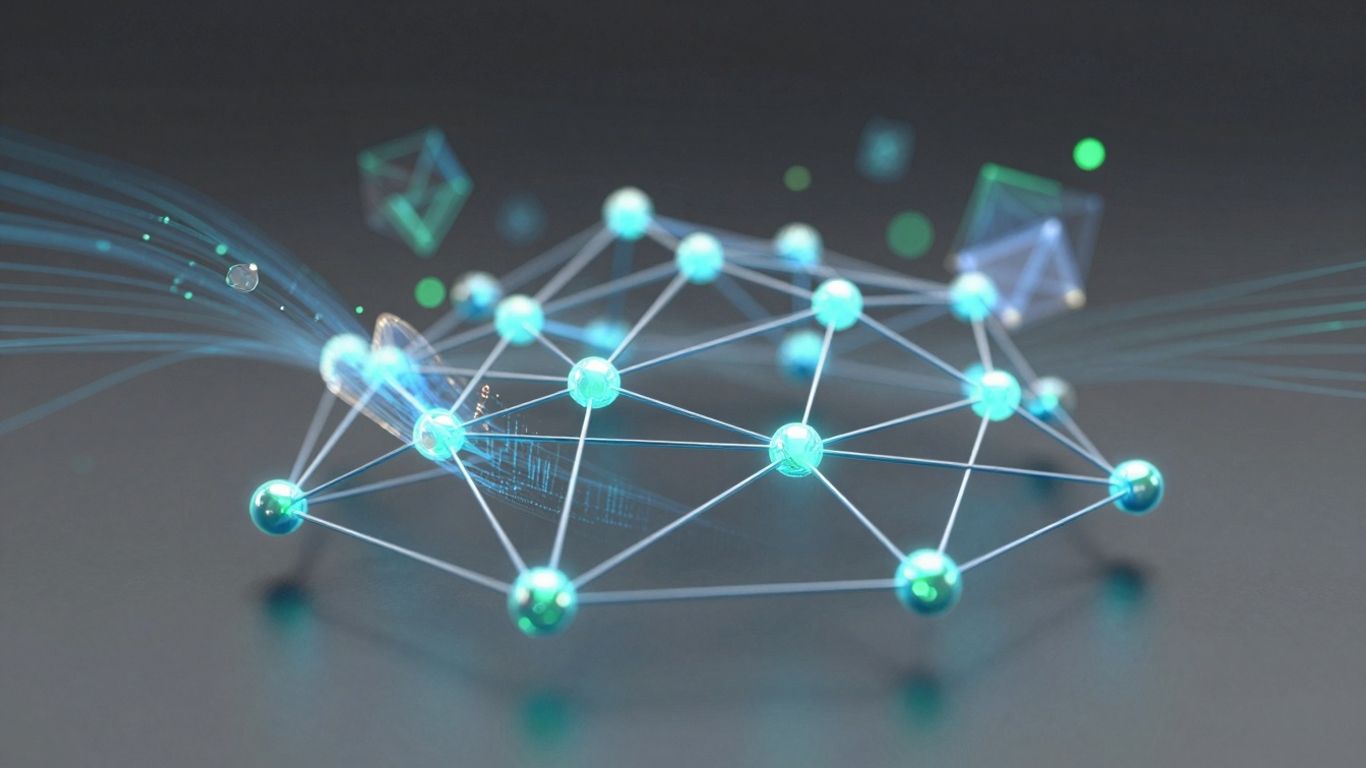
The crypto world is always changing, and that means new problems pop up all the time. It's like trying to hit a moving target, honestly. Criminals are getting smarter, using new tech to do their dirty work, and we have to keep up. It's not just about catching them after the fact anymore; it's about trying to get ahead of them.
Artificial intelligence is a double-edged sword here. On one hand, we're using AI, including large language models (LLMs), to build better detection systems. Think of it as using smart tools to fight smart criminals. But bad actors are also using AI. They're creating more convincing fake identities, generating deepfakes for scams, and sending out way more sophisticated phishing messages. It's a constant arms race. They're even using AI to create fake personas to get around KYC checks, which is pretty wild.
Attackers are always finding new ways to exploit the system. We're seeing a shift from older methods to more complex ones. For instance, cross-chain bridges and Layer 2 solutions, which are supposed to make things faster and more efficient, are also creating new weak spots. If one part of a connected system gets hit, it can cause a domino effect across others. Also, centralized exchanges are still big targets, often because of compromised private keys or admin access. It's not just about smart contract bugs anymore; it's about the whole interconnected web.
Because things move so fast, especially in DeFi, we can't just do security checks once in a while. We need systems that are constantly watching for trouble and can react in seconds, not days. Manual reviews just don't cut it anymore. The market is growing incredibly fast, and security needs to keep pace. If a protocol grows by over 500% in a year, it's seeing way more attacks. We need automated systems that can spot problems as they happen and respond immediately. This is especially true for things like tokenized real-world assets, where losses in the first half of 2025 already blew past the entire previous year's total. It's clear that relying on human-scale responses just won't work as the market gets bigger and more complex. We're talking about needing systems that can handle sub-second responses to threats.
The landscape of crypto crime is constantly shifting. Criminals are adapting, using new technologies like AI and exploiting the very innovations that make crypto exciting. This means our defenses can't be static. We need to be just as innovative and agile, focusing on continuous vigilance and the ability to react instantly to new threats. It's about building resilience into the system itself.
Here's a quick look at some key areas we need to watch:
It's a challenging future, but by understanding these trends and building adaptable GNN-based solutions, we can better prepare for what's next. The integration of advanced analytics, like those found in blockchain intelligence tools, will be key to staying ahead.
So, we've looked at how Graph Neural Networks can be a pretty useful tool for spotting risks in the crypto world. From finding shady smart contracts to spotting money laundering patterns, GNNs seem to offer a way to see connections that might otherwise be missed. It's not a magic bullet, of course. There are still challenges, like getting enough good data and making sure the models are easy to understand. But as the crypto space keeps growing and changing, tools like GNNs are likely to become even more important for keeping things safer for everyone involved.
Think of GNNs as smart computer programs that can understand connections. In crypto, everything is connected – transactions, wallets, and exchanges. GNNs are great at looking at these connections, like how money moves between different wallets, to find patterns that regular programs might miss. This helps spot tricky or risky activities.
Money launderers try to hide where their money comes from by moving it around a lot. GNNs can follow these money trails, even when they jump between many different wallets or go through complex steps. By spotting these unusual patterns, GNNs can flag suspicious activity that looks like money laundering, helping to catch criminals.
Yes, GNNs can help make DeFi safer. These platforms have lots of moving parts and transactions. GNNs can analyze how these parts interact and watch for strange behavior that might mean an attack is happening. This can help spot weaknesses before hackers can exploit them, making DeFi platforms more secure.
Imagine each crypto wallet is a person. 'Anomaly scoring' is like giving each person a score based on how weird their behavior is. GNNs look at all the transactions going in and out of a wallet and its connections to other wallets. If a wallet acts in a way that's very different from most others, it gets a high anomaly score, suggesting it might be involved in something risky.
When a GNN flags a transaction or wallet as risky, it's important to know why. Explaining the decision helps people understand if the GNN made the right call. This is crucial for following rules, checking if the system is working correctly, and making sure that important decisions about crypto risks are fair and understandable.
Criminals are always finding new ways to cheat the system, sometimes using advanced tools like AI. This means GNNs need to keep learning and adapting to new types of fraud. Also, there's so much crypto activity happening all the time, so GNNs need to be fast and efficient to keep up with all the new data and spot risks quickly.