[ newsletter ]
Stay ahead of Web3 threats—subscribe to our newsletter for the latest in blockchain security insights and updates.
Thank you! Your submission has been received!
Oops! Something went wrong. Please try again.
Explore address embeddings for blockchain analytics. Learn how GNNs and topological embeddings uncover insights for fraud detection and risk assessment.


It's pretty wild how much information is just out there on the blockchain, right? Like, tons of data, but making sense of it all? That's the tricky part. We're talking about tracking transactions, figuring out who's who, and spotting any shady business. This is where something called address embeddings blockchain comes into play. Think of it as a way to give each blockchain address a unique fingerprint, based on its activity and connections. This helps us understand the network better and, hopefully, keep things safer.
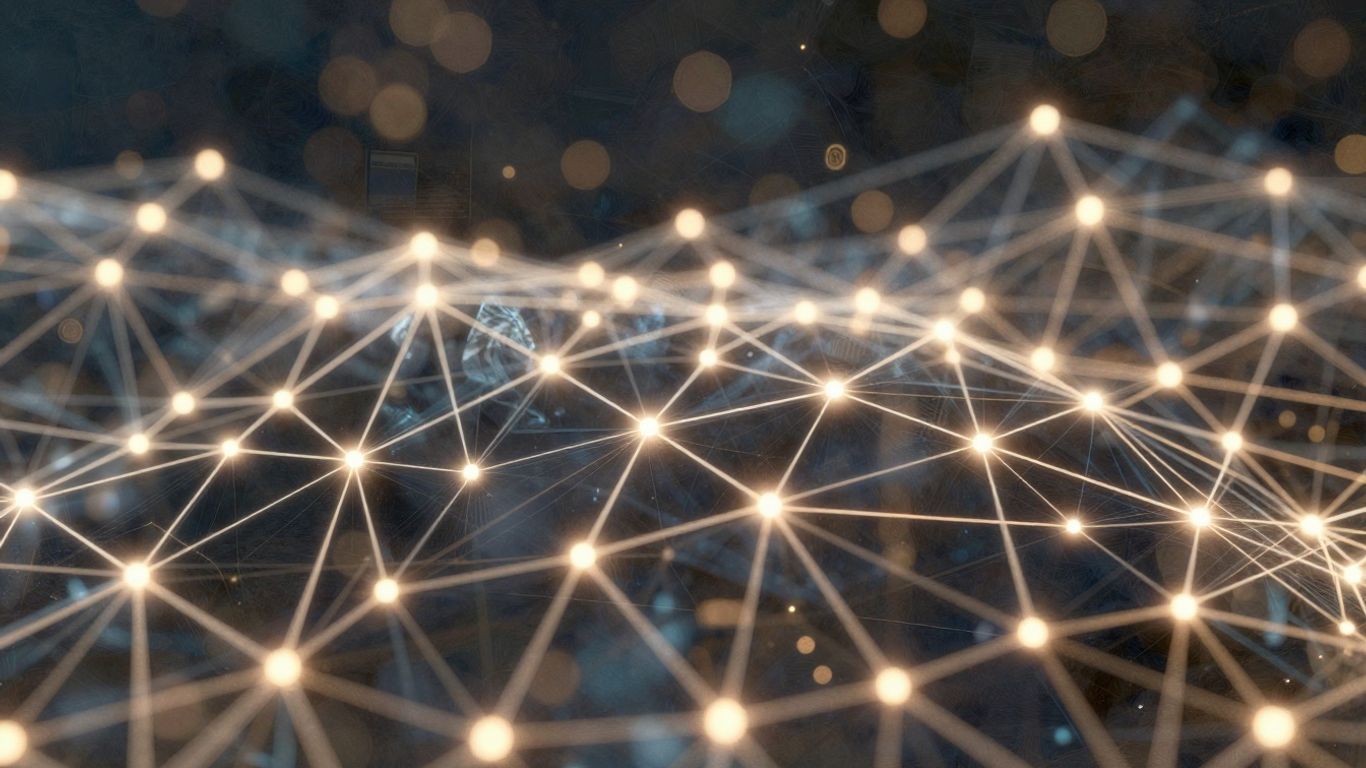
When we talk about blockchain, we're really looking at a massive, interconnected web of transactions. Think of it like a giant, public ledger where every coin movement is recorded. But just looking at raw transaction data can be like trying to understand a city by only looking at individual car trips – it's hard to see the bigger picture. That's where address embeddings come in. They're a way to represent blockchain addresses, like your Bitcoin or Ethereum wallet, in a way that computers can understand and use to find patterns.
At its core, blockchain analysis is about making sense of all those transactions. Early on, people tried to figure out who owned which addresses using simple rules, like "if two addresses are inputs to the same transaction, they probably belong to the same person." These kinds of ideas, called heuristics, were a start, but they weren't always accurate. The sheer volume and complexity of blockchain data mean we need smarter tools.
Imagine you have thousands, even millions, of transactions happening every day. Just looking at them one by one won't tell you much. We need to transform this raw data into something useful. Address embeddings help us do that by capturing the 'behavior' or 'role' of an address within the network. This allows us to move from just seeing transactions to understanding things like:
Blockchains are naturally like networks or graphs. Addresses are like points (nodes), and transactions are the lines (edges) connecting them. Graph theory gives us the mathematical tools to study these networks. By looking at how addresses are connected, how often they transact, and their position within the larger transaction graph, we can start to understand their significance. This network perspective is key to uncovering hidden relationships and patterns that simple transaction logs would miss. It's about seeing the forest, not just the trees.
The challenge with blockchain data is its sheer scale and the pseudonymous nature of addresses. Traditional analysis methods often struggle to keep up, leading to missed connections or inaccurate conclusions. Embeddings offer a way to condense complex network information into a format that machine learning models can process efficiently, revealing insights that would otherwise remain buried.

So, we've talked about how blockchain data is basically a giant, interconnected web. To really make sense of it, especially for spotting shady dealings, we need tools that can handle this kind of structure. That's where Graph Neural Networks, or GNNs, come in. Think of them as super-smart pattern finders for networks.
One of the main ways GNNs help is by looking at transactions and figuring out what's what. Specifically, Graph Convolutional Networks (GCNs) are pretty good at this. They work by taking information from a node's neighbors – like, who sent money to whom, and how much – and summarizing it into a neat little vector. This vector becomes a kind of "embedding" for that node, capturing its local context. By doing this for all nodes, and then combining these embeddings, GNNs can create a representation of the whole network. This is super useful for tasks like labeling transactions as 'licit' or 'illicit'. For example, researchers have used GCNs on datasets like Elliptic, which contains labeled Bitcoin transactions, to try and classify them. While simpler methods like Random Forests have shown decent recall, GCNs offer a more sophisticated way to learn from the network structure itself.
Now, blockchain networks are massive. We're talking millions, even billions, of transactions. Trying to run complex GNN models on graphs this big can be a real headache. It gets computationally expensive, and sometimes, the models just can't handle the sheer scale efficiently. Plus, the way GNNs combine all this neighborhood information can make the final embeddings a bit of a black box. It's hard to tell why the model made a certain decision, which isn't ideal when you're trying to build trust and explain your findings, especially in financial forensics.
This is where the idea of "node embeddings" really shines. Instead of just looking at raw transaction data, we're creating these dense vector representations for each address or transaction. These embeddings capture a lot of information about the node's role and connections within the network. They can be used for all sorts of downstream tasks, like clustering similar addresses, identifying suspicious activity, or even predicting future behavior. The goal is to distill the complex graph structure into a format that machine learning models can easily work with, leading to more accurate and insightful analysis. It's like creating a secret code that describes each participant's behavior on the blockchain.
Here's a simplified look at how GNNs process neighborhood information:
While GNNs are powerful, their complexity can sometimes obscure the reasoning behind their predictions. This lack of interpretability is a significant hurdle when trying to build trust and explain findings in sensitive areas like financial crime detection. Finding ways to make these embeddings more understandable is a key area of research.
So, we've talked about how blockchain data is basically a giant, messy graph. Now, let's get a bit more specific about how we can actually make sense of it, especially when it comes to individual addresses. Instead of just looking at raw transactions, we can zoom in on smaller structures within the transaction network. Think of these as "chainlets" – little connected pieces of the overall graph. The idea is that an address's position within one of these chainlets tells us something about its role. We call these roles "orbits".
The position of an address within a chainlet determines its structural role, or "orbit". This is super useful because it means we can start to categorize addresses based on how they behave in transactions, not just who they're sending money to or from.
Here's a simplified look at how we might think about orbits:
It's like looking at a social network and figuring out if someone is a connector, a gatekeeper, or just a casual participant. The same principle applies here, but with financial flows.
Before we had fancy embedding techniques, people relied on simple rules, or "heuristics," to group addresses. For example, the "co-spending" heuristic says if two addresses are inputs to the same transaction, they probably belong to the same person. Another one, "transition," links addresses if they appear in sequential transactions. These worked okay for basic clustering, but they often missed the mark or grouped addresses that weren't actually related.
The problem with old-school heuristics is that they're often too simplistic. They don't capture the full picture of how addresses interact within the complex web of blockchain transactions. This can lead to inaccurate groupings and missed connections, especially when dealing with sophisticated illicit activities.
Our topological embeddings, like orbits, go way beyond these basic heuristics. Instead of just looking at direct connections, they consider the broader structural patterns. This allows for much more accurate clustering of addresses, helping us identify distinct entities or groups that might be involved in coordinated activities, whether legitimate or not.
One of the coolest things about these topological embeddings, like orbits, is that they're not just black boxes. We can actually understand what they mean. For instance, certain orbit patterns might be strongly associated with specific types of illicit activities. Imagine finding a particular sequence of transaction roles that ransomware operators frequently use. By identifying these patterns, we can flag addresses exhibiting similar behaviors.
This interpretability is a big deal. It means we can build models that not only detect suspicious activity but also explain why they think it's suspicious. This is super helpful for investigators trying to piece together complex financial crimes. It moves us away from just saying "this address is bad" to saying "this address behaves in a way that is commonly seen in ransomware attacks, based on its structural role in transaction chains."
For example, we might see that addresses involved in money laundering often exhibit a specific set of orbits that involve rapid transfers through multiple intermediate addresses before consolidating funds. This kind of insight is invaluable for tracking down criminal networks.
So, what can we actually do with these fancy address embeddings? Turns out, quite a lot. They're not just some abstract concept for academics; they're becoming real tools for making the blockchain world safer and more transparent. Think of them as a way to understand the 'personality' of an address based on its transaction history and its place in the network.
This is a big one. Criminals love crypto because it can be pseudonymous, but that doesn't mean it's untraceable. Address embeddings help us spot patterns that are common in illicit activities. For instance, certain transaction structures, or 'orbits' as some researchers call them, are frequently used by ransomware operators or money launderers. By identifying these patterns, we can flag suspicious addresses. It's like having a digital detective who can recognize the fingerprints left behind by bad actors.
The challenge with illicit finance is that it's always evolving. Criminals adapt, using new techniques like cross-chain bridges or privacy coins. Address embeddings, especially when combined with advanced graph neural networks [a361], offer a dynamic way to keep up with these changing tactics.
Imagine you're a business that interacts with many crypto wallets. You need to know if a particular wallet is high-risk. Address embeddings allow for rapid assessment. Instead of manually digging through transaction histories, an embedding can give you a risk score almost instantly. This is super useful for:
Know Your Customer (KYC) and Anti-Money Laundering (AML) are critical for any financial service. Address embeddings can significantly improve these processes. They provide a deeper layer of analysis beyond just verifying a person's identity. For example, when onboarding a new client, you can use embeddings to:
This makes compliance more robust and helps prevent the financial system from being exploited. It's about moving from a reactive approach to a more proactive one, using the inherent structure of blockchain data to our advantage.
So, where do we go from here with address embeddings in blockchain analytics? It's a rapidly evolving space, and the next few years look pretty exciting. We're seeing a push towards more sophisticated ways to represent and analyze blockchain data, moving beyond just transaction history.
Right now, most blockchain analysis focuses on the transaction graph itself. But blockchains are becoming more complex. Think about it: transactions have associated metadata, smart contracts have code, and users interact with decentralized applications (dApps). The future involves weaving all this different types of data together into a richer graph. Imagine combining transaction patterns with smart contract code analysis or even off-chain data like social media sentiment related to a project. This multi-modal approach means our embeddings will capture a much more complete picture of an address's behavior and role.
Discovering those structural roles, or "orbits," we talked about earlier is key. Currently, some methods might require labeled data or specific heuristics. The next big step is using self-supervised learning. This means the models can learn these roles directly from the vast amounts of unlabeled blockchain data. Think of it like the model figuring out common patterns of interaction and transaction flow on its own, without us having to tell it what to look for. This could lead to the discovery of entirely new types of address behaviors and roles we haven't even considered yet. It's about letting the data speak for itself.
Let's be real, blockchains are huge. The sheer volume of transactions and addresses makes analysis a massive computational challenge. Future work absolutely has to focus on making these embedding techniques more scalable and efficient. We need methods that can process terabytes of data without taking weeks or requiring supercomputers. This might involve new graph processing techniques, optimized embedding algorithms, or even hardware acceleration. The goal is to make advanced blockchain analytics accessible and practical for everyday use, not just for a few specialized firms. This also ties into making sure that sensitive data, like biometric templates, is handled securely if it ever needs to be stored, mitigating legal risks [5809].
Here's a quick look at what we might see:
The ongoing development in this field promises to transform how we understand and interact with blockchain networks. As these technologies mature, we can expect more robust security, better fraud detection, and a deeper insight into the digital economy.
So, we've looked at how address embeddings can really help us make sense of all the data on the blockchain. It's not just about seeing transactions; it's about understanding the patterns and connections behind them. This kind of analysis is becoming super important for keeping things safe and secure in the crypto world, whether you're an investor, a developer, or just someone trying to understand what's going on. As the blockchain space keeps growing and changing, tools like these will only get more useful for spotting trouble and making sure everything runs smoothly. It's all about using smart tech to build a more trustworthy digital future.
Think of address embeddings as a special code or fingerprint for each digital wallet address on a blockchain. This code helps computers understand the address's history and how it's connected to other addresses, much like how we understand people by their friends and activities. It turns complex blockchain data into something simpler for computers to analyze.
These embeddings help us see patterns that are hard to spot otherwise. For example, they can help identify if an address is linked to illegal activities, like money laundering, or if it's a safe address to interact with. It's like having a super-powered magnifying glass for looking at blockchain transactions.
Graph neural networks are like smart detectives for networks. Blockchains are basically huge networks of transactions. These networks can analyze how addresses are connected, like a web, and use that information to create better address embeddings. This helps them understand the 'neighborhood' of an address and its role in the network.
Yes, definitely! By understanding the patterns and connections of different addresses, embeddings can highlight suspicious activity. They can help spot when money is being moved around in ways that criminals use to hide illegal funds, making it easier for investigators to track down bad actors.
'Chainlets' are like small groups of connected transactions, and 'orbits' describe the specific role an address plays within these groups. Imagine a dance floor: different dancers have different positions and movements. Orbits help define these unique structural roles for addresses, making it easier to tell them apart based on their behavior within transaction patterns.
While the math behind them can be complex, the goal is to make them understandable. By translating complicated blockchain data into these 'fingerprints,' we can build tools that give clear insights. This helps everyone, from security experts to regular users, better understand the risks and safety of different blockchain addresses.